No client comes automatically.


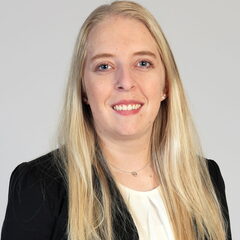
Katharina Hadorn, founder of private Care AG, answers questions from Spitex-Report in an interview. She talks about her understanding of clients, the recipe for success of private care in the market and the recruitment of qualified staff.
“What we do costs money – and what we don’t do costs money too”
31 January 2018. Martin Radtke, Spitex-Report.
In 2008, ten years ago, Katharina Hadorn founded the private Spitex (home care) organisation private Care AG. In this interview she explains how she holds her own in the market of Spitex organisations and what the decisive success factor in the Spitex business is. The agile manager also has clear ideas about how she can help to reduce the shortage of skilled Spitex staff.
You provide your services in a heavily regulated and fiercely competitive market. What are your biggest challenges?
We work in areas of extreme tension, each of which is demanding in its own right. One example is the combination of professional nursing care with individual services such as personal support and housekeeping. Planning and delivering such a service is very complex. Another area of tension lies between the demands that clients and their relatives place on us on the one hand and the legal requirements on the other. Our clients’ expectations are rightly especially high, and every situation is different. Every day we adapt a situation somewhere and learn something new. But not every wish is compatible with the requirements. On top of that, our work must always be economically viable.
And the requirements are not the same in every canton…
Exactly. We now hold operating licences in the cantons of Aargau, Solothurn and Zürich. Each canton wants to see different documents and evidence before it grants an operating licence. The only thing they have in common is that all the requirements are high. Once we have the operating licence, we have to meet the different conditions of each canton. Quality control, training obligations and so on – it is different in every canton.
No client comes to us automatically
How do you find your clients?
No client comes to us automatically. Our marketing and advertising are based on two pillars: first, we systematically maintain a network of professionals who recommend us and our services. Second, we try to approach potential clients and their relatives directly. We measure precisely how clients found us so that we can optimise here too.
How do you finance your investments?
Out of our own pocket. We are an entirely self-financed SME. We have to examine every investment carefully and weigh up whether it brings the desired competitive advantage. That means being incredibly agile and flexible, recognising opportunities early and seizing them immediately. Competition is ruthless: in professional nursing care, non-profit organisations hold service mandates from the municipalities, and in personal support and housekeeping there are countless competitors with different models. This is the market environment we operate in, and we orient ourselves towards what our clients expect. To put it bluntly: everything we do costs money. And everything we don’t do costs money too – because then someone else does it and we lose market share.
You offer nursing and support services around the clock. Before accepting an assignment, how do you make sure that clients can actually pay for the services?
We check their creditworthiness and, where possible, whether their health insurance premiums have been paid. Depending on the situation, we also ask for a payment on account, just as hospitals do.
We run our human resources department as a profitable profit centre
Why did you also go into the recruitment business?
Our business is all about people. Offering recruitment as a service has been part of our corporate strategy from the very beginning. Attracting the right staff and keeping them are decisive success factors. Today we run our human resources department as a profitable profit centre. Reaching this level took years – and the development is not yet complete; we still have plenty of plans.
How do you deal with the strong fluctuations in workload that the business brings with it?
This challenges us again and again, too. A fluctuating order situation makes staff planning a challenge. We have now reached a good company size, and we have learnt to deal with it. Over the years we have developed a controlling system that serves us very well. And yet: sometimes we lack clients, sometimes staff. Bottlenecks and high pressure keep occurring. That is our business.
It is claimed that private Spitex organisations pay much lower wages than public ones. How do you respond?
Nursing is an employees’ market with thousands of vacancies in Switzerland. Private Spitex organisations certainly cannot afford to pay lower wages. On the contrary, with more business areas, tasks and responsibilities than other Spitex organisations, we offer comparatively attractive and well-paid positions in our business areas.
Do you employ staff who live outside Switzerland?
No, to this day we do not employ any staff who live outside Switzerland.
Today we are ready to take on service mandates and to cover large volumes
How has the market for private Spitex organisations developed over the last ten years?
Private Spitex organisations have gained decisive market share, and most of them are now very professionally organised. Today we are also ready to take on service mandates and to cover large volumes. Over the last ten years, private and public organisations have moved ever closer together, and the differences have become smaller. The requirements, for example regarding quality, have risen sharply for all Spitex providers. At the same time, we are seeing more complex client situations and people who stay at home for much longer.
How do you handle the obligation to provide training and further education that already exists in the canton of Aargau and is about to be introduced in the canton of Zürich?
We have our own training licence for FaGe apprentices (healthcare assistants) and have been training our first apprentices ourselves since 2016. We have also been offering work placements for HF students since 2013. It is our clear intention to meet all the requirements, just like any other company.
Where do you still see potential in training and further education?
We want to develop our own qualified staff and invest in motivated SRK-trained employees who perform very well with us. We see a large gap in the training system here: for employees who have completed an SRK course (Swiss Red Cross), there are not yet enough follow-on options for gaining higher qualifications. I see some potential here to train professionals who will stay in nursing.
Katharina Hadorn
Katharina Hadorn is Managing Director and Chair of the Board of Directors of private Care AG, based in Baden. Katharina Hadorn founded private Care AG in 2008. Today the company employs around 140 people and holds operating licences in the cantons of Aargau, Solothurn and Zürich. The services of private Care AG include nursing care, personal support and housekeeping, from one to 24 hours.
Katharina Hadorn is a board member of the Association Spitex Privée Suisse, the Spitex association of private Spitex organisations, and is involved as a member of several specialist groups.
A trained nurse and HR specialist, she studied business administration and human capital management. Katharina Hadorn has been working in her field since 2003. She began her professional career at the University Hospital in Zürich and held various senior positions in the placement of medical professionals.